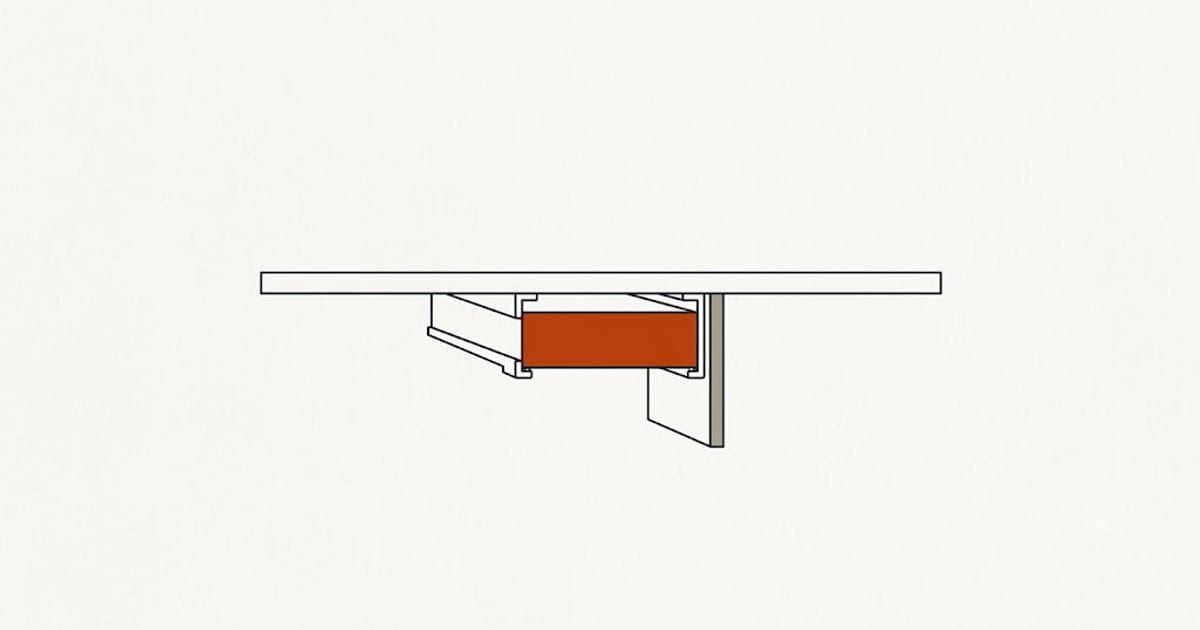
Both methods transfer the building's load to deeper, more competent ground. They do it in ways that are almost entirely different on site.
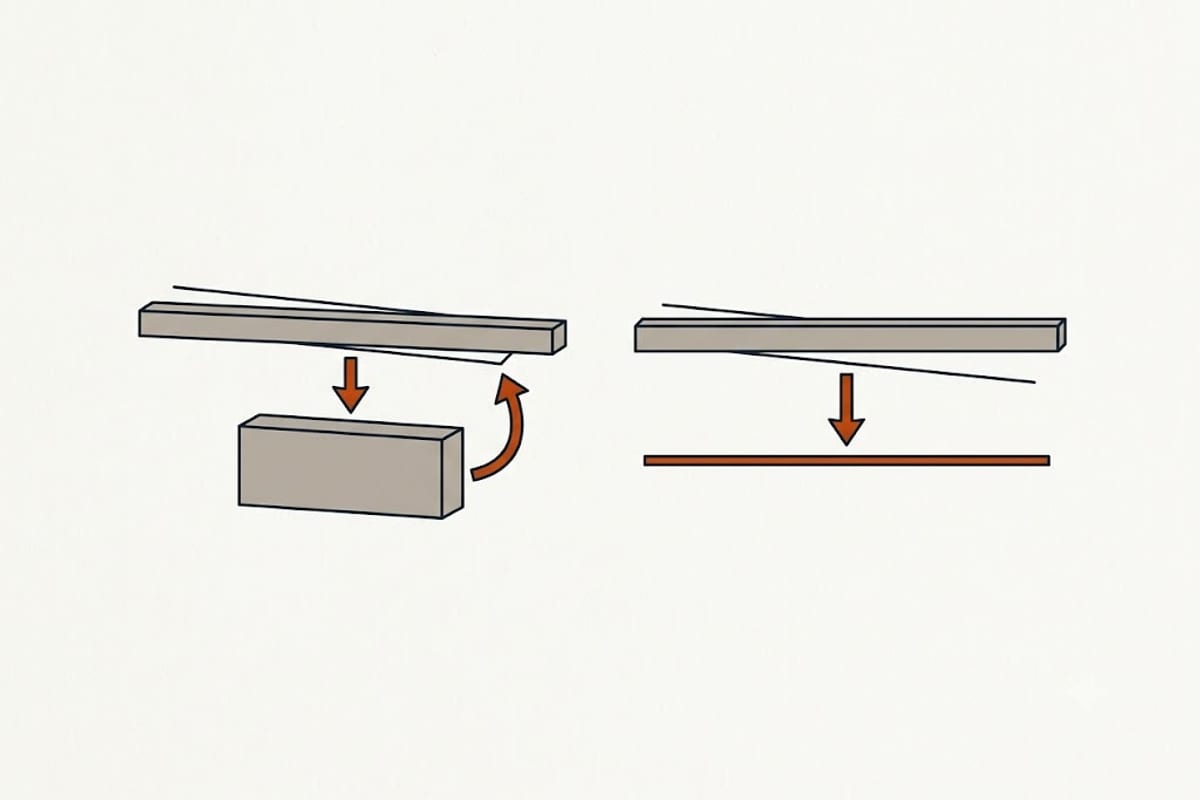
Traditional mass concrete underpinning
Excavate a pit beneath a short length of the existing footing, down to competent soil, and fill it with concrete. Then move along to the next section and repeat.
Sections are done in a sequence — never adjacent, always leaving supported lengths between — so the wall is never unsupported over a long span.
Advantages. Proven for a very long time, no proprietary hardware, and it produces a continuous new foundation at depth.
Disadvantages. Slow, labour-intensive, requires substantial excavation, and each section has to cure before the next stage. On a residential job it is disruptive and expensive relative to piers.
It remains common in some markets and in heritage work, and it is the standard approach where a whole foundation is being taken to a new depth — for example when adding a basement.
Pier underpinning
Push or helical piers installed at intervals, with brackets transferring the footing load onto them.
Advantages. Faster, far less excavation, immediate load transfer, and each pier is individually verifiable by refusal pressure or torque.
Disadvantages. Point support rather than continuous, requires the footing to be sound enough to carry a bracket, and depends on proprietary hardware and on the installer's competence.
For residential settlement repair in North America, this is the normal method.
Which one a job calls for
Settlement of an existing house — piers, almost always.
Deepening a foundation for a basement dig or an adjacent excavation — mass concrete or a specialist system.
A footing in poor condition that cannot carry a bracket — repair the footing first, or use mass concrete which does not need one.
Heritage structures with unusual footings — often mass concrete, and always an engineer.
The footing has to be capable
This is the requirement people overlook with piers. The bracket clamps to the footing and loads it eccentrically, and a footing that is crumbling, thin, unreinforced or already cracked at that point may not take it.
Where that is the case, the options are localised footing repair before bracketing, or a method that supports the wall directly rather than through the footing.
An inspection of the footing at one location, before quoting the whole house, is worth requesting on an older property.
Sequencing matters in both
Neither method supports a wall by removing its support all at once. Mass concrete works in alternating short sections; pier installation excavates one location at a time and does not open a continuous trench along the wall.
A contractor proposing to dig a continuous trench exposing the footing along its full length is proposing something that should be questioned.
Cost, roughly
Pier underpinning is generally cheaper per linear foot of wall than mass concrete for residential settlement work, largely because it involves far less excavation and no concrete curing schedule.
Mass concrete becomes competitive where the whole foundation is going deeper anyway, because at that point the excavation is happening regardless.
What both share
Both are underpinning in the general sense — transferring load to deeper ground. Both require knowing what is down there. Both need a record of what was reached at each location.
And both are the second half of the job. The first half is establishing why the foundation moved, because neither method stops the cause.
Terminology on a quote
In common usage in North America, "underpinning" and "piering" are used almost interchangeably, and a quote may use either word for driven piers. In the UK and much of Europe, underpinning more often means the mass concrete method.
The word does not tell you what is being proposed. The specification does — pier type, spacing, depth or torque target, bracket, and whether the footing needs work first. Ask for those rather than relying on the heading.