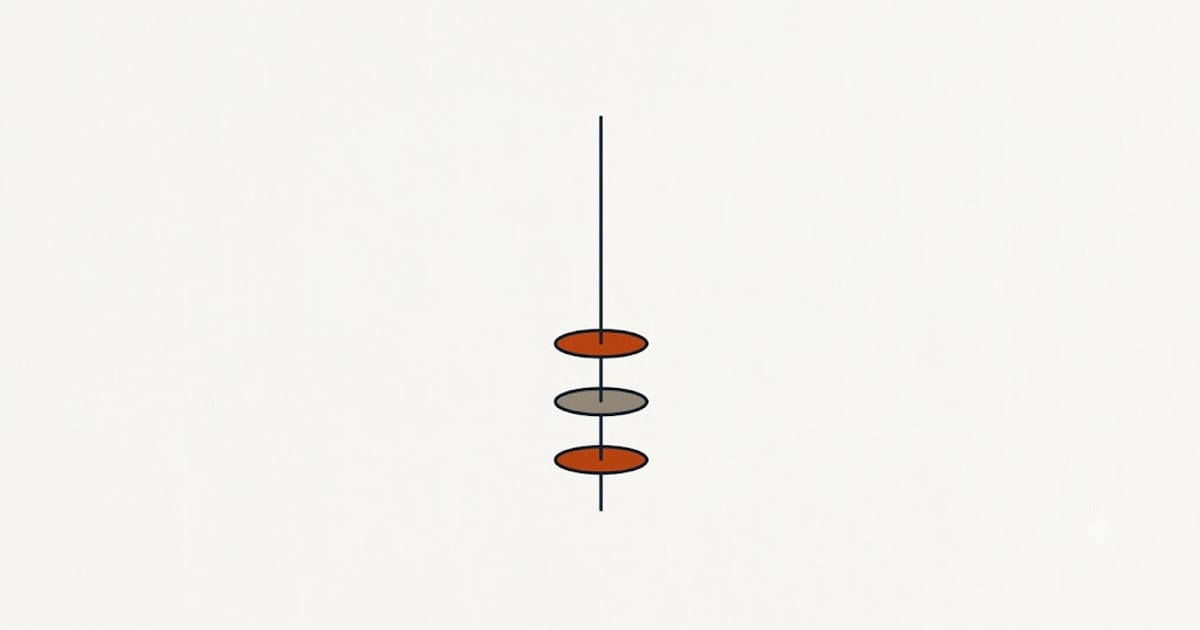
A helical pier is a steel shaft with one or more helical plates welded to it, screwed into the ground by a hydraulic torque motor until it reaches a required torque.
Why torque is the measurement
There is an established empirical relationship between the torque required to advance a helical pier and the capacity that pier will have. Multiply the final installation torque by a capacity factor specific to the shaft, and you have a capacity figure.
That means capacity is known at installation, pier by pier, without a load test on each one. It is the defining advantage of the method.
The capacity factor depends on shaft size and shape, and it is published by the manufacturer. A contractor should be able to state which factor they are using.
The plates do the work
The helical plates bear on the soil; the shaft mostly transmits load between them. Plate size and number are selected for the soil and the required capacity — larger plates in weaker soil, more plates for more capacity.
This is why a helical pier specification is not just a length. It names shaft size, plate configuration and target torque.
Where they win
Light structures. No reaction weight is needed, so porches, stoops, additions, decks, manufactured homes and garages are all viable.
New construction, where there is no building yet to react against and helicals can be installed before anything is built.
Tight access, because the equipment can be small.
Immediate loading. There is no cure time; the pier carries load as soon as it is connected.
Low vibration, which matters next to sensitive structures or fragile finishes.
Uplift resistance. Helicals resist being pulled up as well as pushed down, which is useful where wind uplift or expansive soil heave is a factor.
Where they are less suitable
Very dense or obstructed ground, where the plates cannot advance — cobbles, rubble fill, or rock. A helical that hits an obstruction may reach the target torque without having reached a competent bearing layer, and the record will not distinguish the two.
Where a torque record is not kept, in which case the entire verification advantage is lost.
The installation record
For each pier: final installation torque, depth, shaft and plate configuration, and position on a plan. The calculated capacity follows from the torque and the capacity factor.
This is a genuinely useful document, more informative than a push pier record, and it is worth insisting on.
Brackets and connection
As with push piers, a bracket transfers load from the footing to the shaft, and it has to be matched to both. On new construction the connection is designed in rather than retrofitted, which is simpler.
Where the footing is in poor condition, repair to the footing may be needed before it can carry a bracket at all.
Corrosion and design life
Helicals are galvanised, and design life depends on soil aggressiveness — resistivity, pH, chlorides. In ordinary soils the galvanising is expected to last decades.
In aggressive soils, thicker galvanising, larger sacrificial section, or cathodic protection are the options. If a site is known to be aggressive, this is a conversation to have rather than assume.
Cost against push piers
The ranges overlap. Helicals are often slightly more per pier because of the manufactured shaft and plates; push piers become expensive where they turn out to need many sections.
The choice is rarely made on price. It is made on structure weight, soil, access and whether verification by torque is wanted.
Questions worth asking a contractor
Which capacity factor are you using, and why that one. What target torque is specified for my design load. Will I receive a torque record for every pier. Is the product ICC-evaluated, and can I see the report.
Those four questions distinguish a contractor working to an engineered specification from one installing to feel. All four have short, factual answers if the work is being done properly.