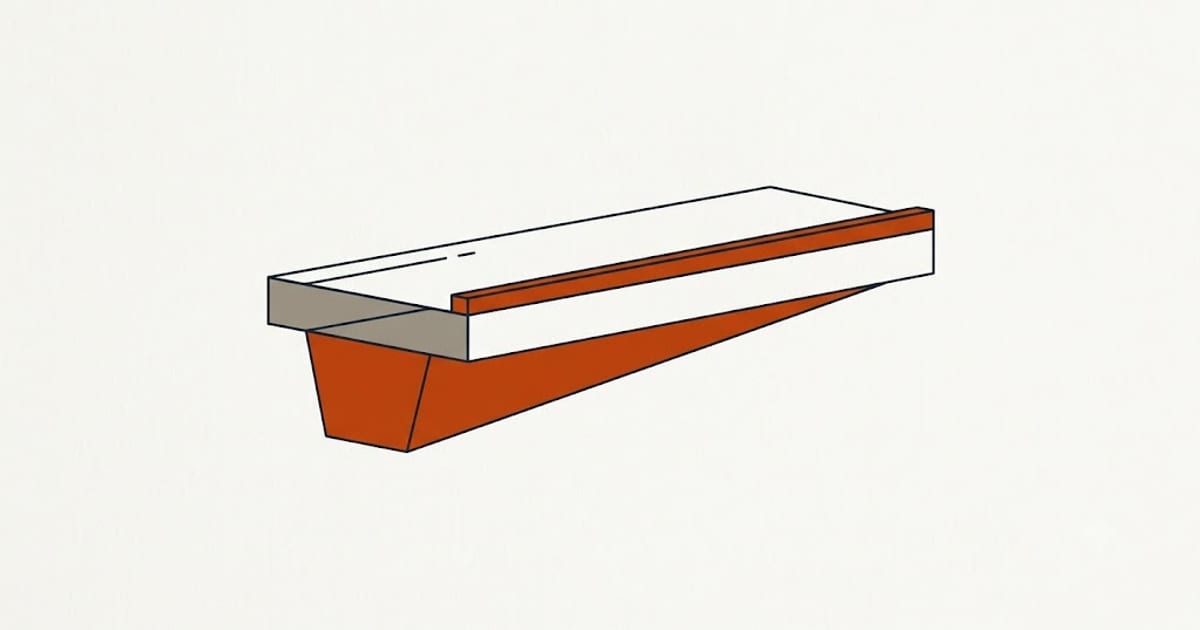
Polyurethane injection — often sold as foam jacking or poly levelling — raises a settled slab by injecting expanding polymer through small holes drilled in the concrete.
It is fast, the holes are small, and the slab is usable within hours. It is also solving a different problem from a pier.
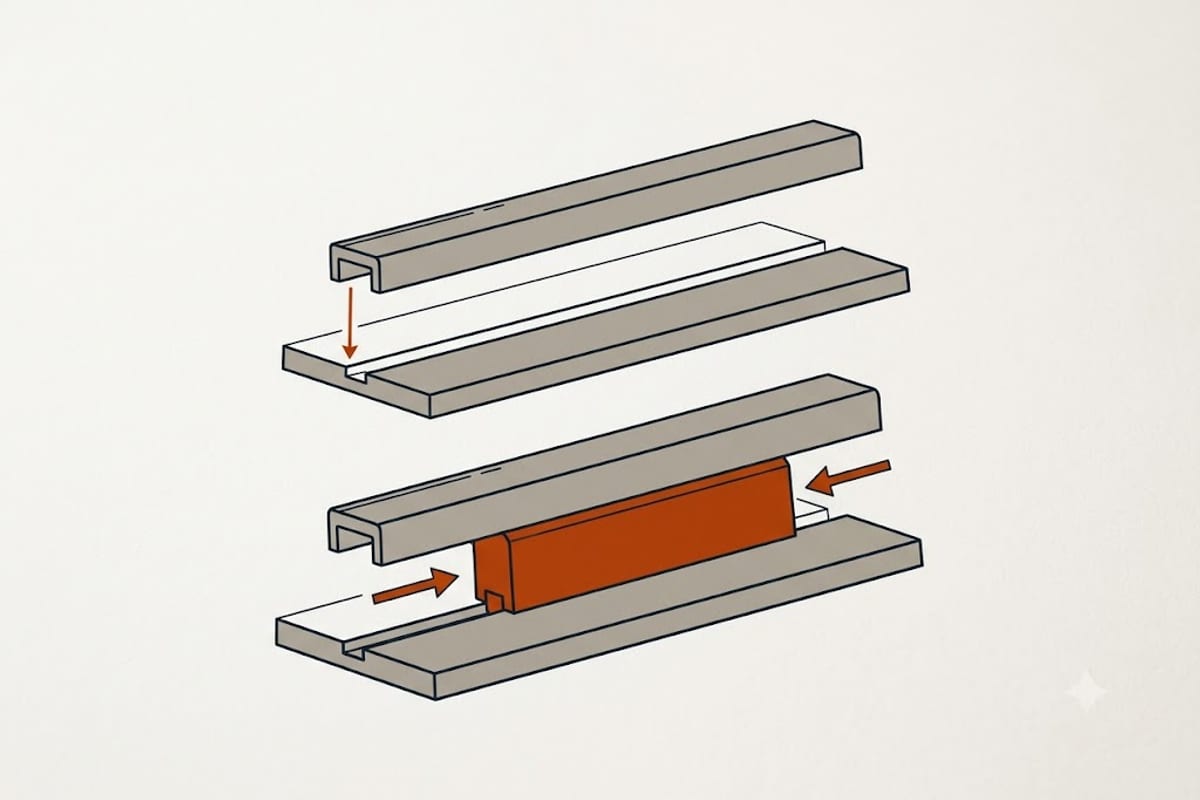
What foam does
The polymer expands under the slab, fills voids, and the expansion pressure lifts the concrete.
It bears on the soil immediately beneath. It does not reach down to a bearing stratum, and it does not transfer load to anything deeper than the material it displaced.
What a pier does
A pier passes through the unstable soil entirely and transfers load to a competent layer below it, verified at installation by refusal or torque.
That is the distinction, and it decides which method is appropriate.
When foam is the right answer
Voids under a slab from erosion, from consolidation of fill, or from a leak that has since been repaired, where the soil below is otherwise competent.
Concrete flatwork — driveways, walkways, patios, garage floors, pool decks. This is foam's home ground and it does the job very well.
Interior slab settlement where the alternative is cutting the floor for piers, and where the underlying soil is stable.
Where disruption must be minimal — a finished basement floor, a commercial space that cannot close.
When it is not
Active settlement where the soil below is still moving. Foam supported on moving soil moves with it.
Structural loads. A load-bearing wall footing is a pier question, not a foam question.
Deep unstable soil, which is exactly what a pier exists to bypass.
Expansive clay that is heaving, where adding pressure from below is working with the mechanism causing the damage rather than against it.
The honest comparison
Foam is cheaper per square foot, faster, less disruptive, and adds almost no weight — which matters, because mudjacking's cement slurry can load already-weak soil further.
Piers cost more, take longer, and are the only one of the two that addresses unstable soil at depth.
The wrong comparison is on price, because they are not alternatives for the same condition. The right question is what is under the slab, and that is answered by a soil assessment rather than by a quote.
Mudjacking, for completeness
The older method: a cement and soil slurry pumped through larger holes to lift the slab. Cheaper than polyurethane, heavier, larger holes, and longer cure.
Weight is the real objection. Where a slab settled because the soil could not carry what was already there, adding several hundred pounds of slurry is not obviously helpful.
What to ask for
Where foam is proposed, ask what is believed to be under the slab and why, whether a void is expected or whether the soil has consolidated, and what happens if the slab settles again.
Where the answer is that nobody knows, that is an argument for finding out — a probe, a soil test, or a camera survey of any drain lines beneath — before injecting anything.
Both, sometimes
On a house with perimeter settlement and interior voids, the correct answer can be piers at the walls and foam in the middle. That combination is common and it is not a contractor hedging; it is two conditions treated appropriately.
Control, and what can go wrong
Foam expands with force, and the lift is controlled by where and how much is injected. Over-injection lifts more than intended or cracks the slab; injection at the wrong point tilts a section rather than raising it.
This is a skill rather than a machine setting, and it is the reason results vary between contractors using identical materials. Ask how many injection points are planned and how the lift will be monitored — a laser on the slab during injection is the normal answer.
Longevity
The polymer itself is stable, does not absorb water, and does not decompose. The question is never the foam; it is the soil beneath it.
Where a void was filled and the cause of the void was fixed, the repair lasts. Where the soil is still consolidating or still being eroded by water, the slab settles again and the foam settles with it.