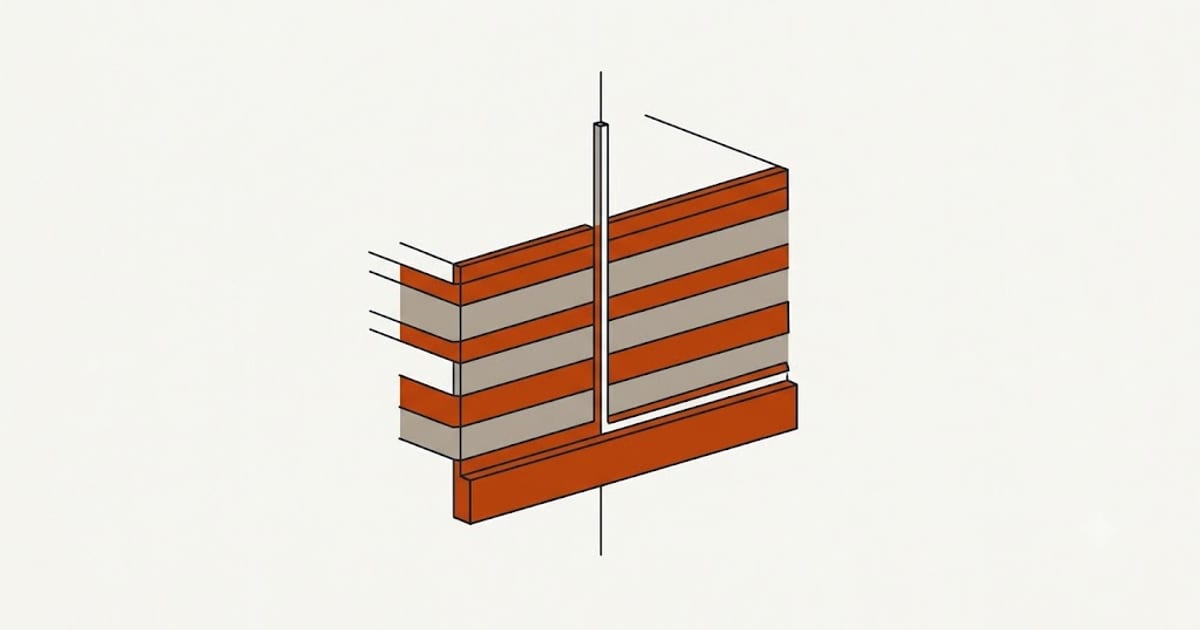
A push pier — also called a resistance pier — is a series of steel tube sections driven vertically into the ground by a hydraulic ram, using the weight of the building as the thing to push against.
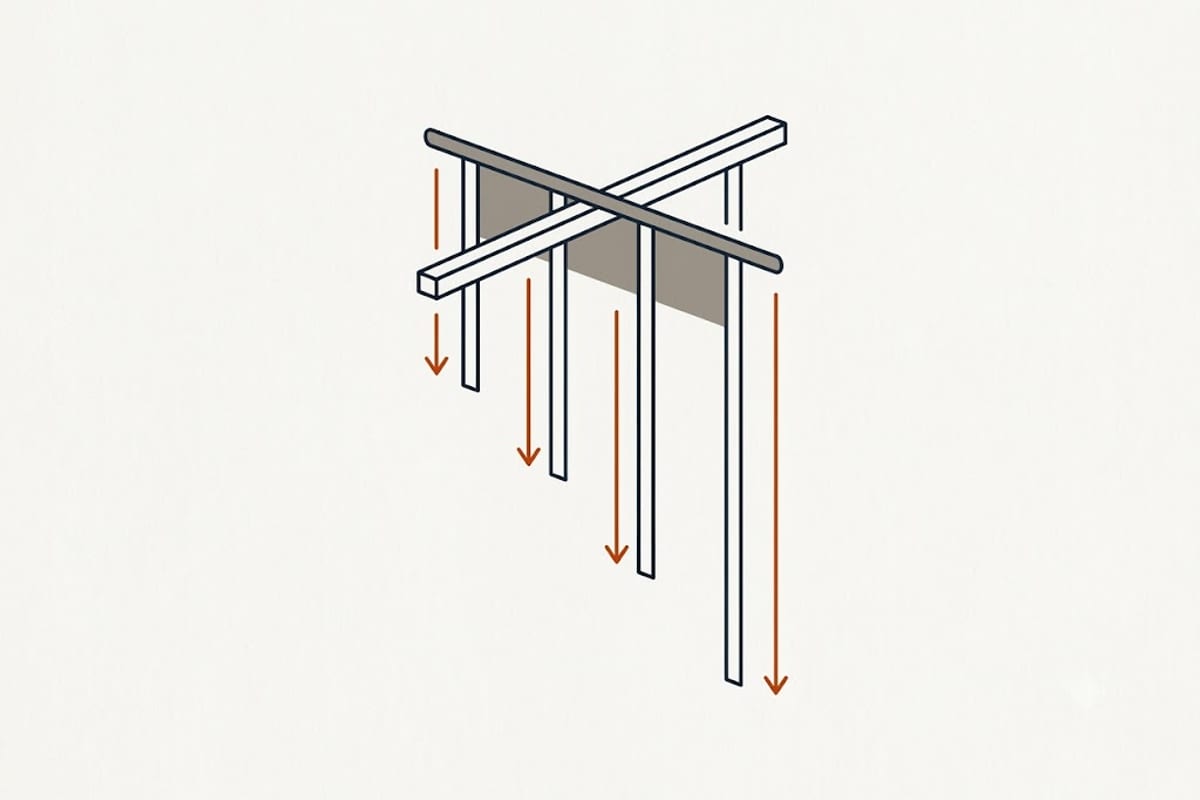
The sequence
Excavate at the pier location down to the footing. Attach a bracket to the underside and outside of the footing. Set a hydraulic ram on the bracket. Drive the first pier section down, add the next, drive again, and continue.
The pier advances easily through soft material and slows as it meets denser soil. When it stops advancing under the maximum pressure the structure can react against, it has reached refusal.
Why refusal is meaningful
Refusal means the pier is bearing on something that will not compress under a load greater than the building can apply. That is physical evidence rather than an assumption, and it is push piers' main advantage.
The depth at which it happens is not known beforehand. Neighbouring piers on the same house routinely differ, sometimes substantially, because the bearing layer is not flat.
The weight requirement
The reaction force comes from the building. A heavy structure — two storeys, masonry, brick veneer — supplies plenty. A light one does not, and the pier stops advancing not because it reached anything but because the house started lifting.
This rules push piers out for porches, stoops, slab additions, garages, manufactured homes and most single-storey light-frame construction on their own.
Where the structure is marginal, a contractor may propose helical piers instead, and that recommendation is usually about physics rather than preference.
Load transfer and the factor of safety
Because the pier was driven using the building's own weight, the driving force relates to the load it will carry. Contractors typically drive to a pressure that exceeds the design load by a stated factor, which is where the safety margin comes from.
Ask what factor is used and what pressure each pier reached. Both should be in the installation record.
Brackets are half the system
The bracket is what connects the footing to the pier, and it carries the load in an eccentric position — offset from the pier's centreline, because the pier is outside the footing.
That eccentricity is designed for, and the bracket has to be matched to the pier and to the footing it attaches to. A footing that is deteriorated, undersized, or has no reinforcement may need repair before a bracket can be attached, and that is a line item people do not expect.
What the installation record should show
For each pier: the depth reached, the pressure at refusal, the number of sections, and the position on a plan.
That document is the evidence that piers reached something. Without it, all that is verifiable afterwards is that the ground was disturbed and the invoice was paid.
Where push piers struggle
No bearing stratum within reach. Some sites are soft to great depth, and the pier keeps going until it runs out of practical depth. This is a geotechnical question that should be answered before quoting.
Very deep bearing layers, where the number of sections makes the job expensive and the quoted price moves.
Light structures, as above.
Sites with obstructions — old foundations, boulders, rubble fill — where a pier can refuse on an obstruction rather than a bearing layer. Refusal at an unusually shallow depth compared to neighbouring piers is the signal, and it should be investigated rather than accepted.
Cost behaviour
Priced per pier, and the price is sensitive to depth because deeper means more sections and more machine time.
Where a quote assumes a depth, establish in writing what happens if the piers go materially deeper. Some contractors absorb it; some charge per additional section; and finding out afterwards is the wrong time.