Every house cracks. Concrete shrinks as it cures, timber dries and moves, and a building settles slightly into its site in the first few years. Most of what people photograph and worry about is that.
What separates it from real settlement is the direction, the width and the pattern.
Cracks that usually do not matter
- Fine vertical cracks in a poured wall, under about ⅛ inch, especially near the middle of a long span. Shrinkage.
- Hairline cracks at the corners of windows and doors in drywall. Ordinary timber movement.
- Fine cracks in a basement floor slab. The slab is not structural and it shrinks.
- Cracks that have not changed in years.
Cracks that do
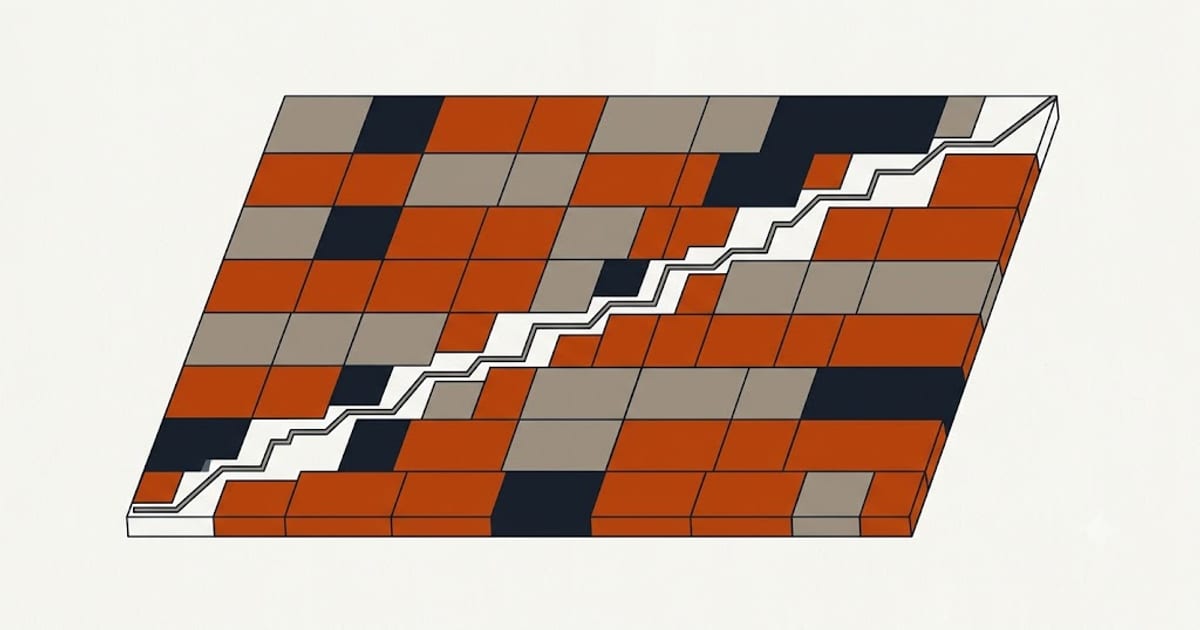
Stair-step cracking in masonry, following the mortar joints diagonally. This is the classic settlement signature: one part of the wall has dropped relative to another, and the block or brick has separated along the weakest path.
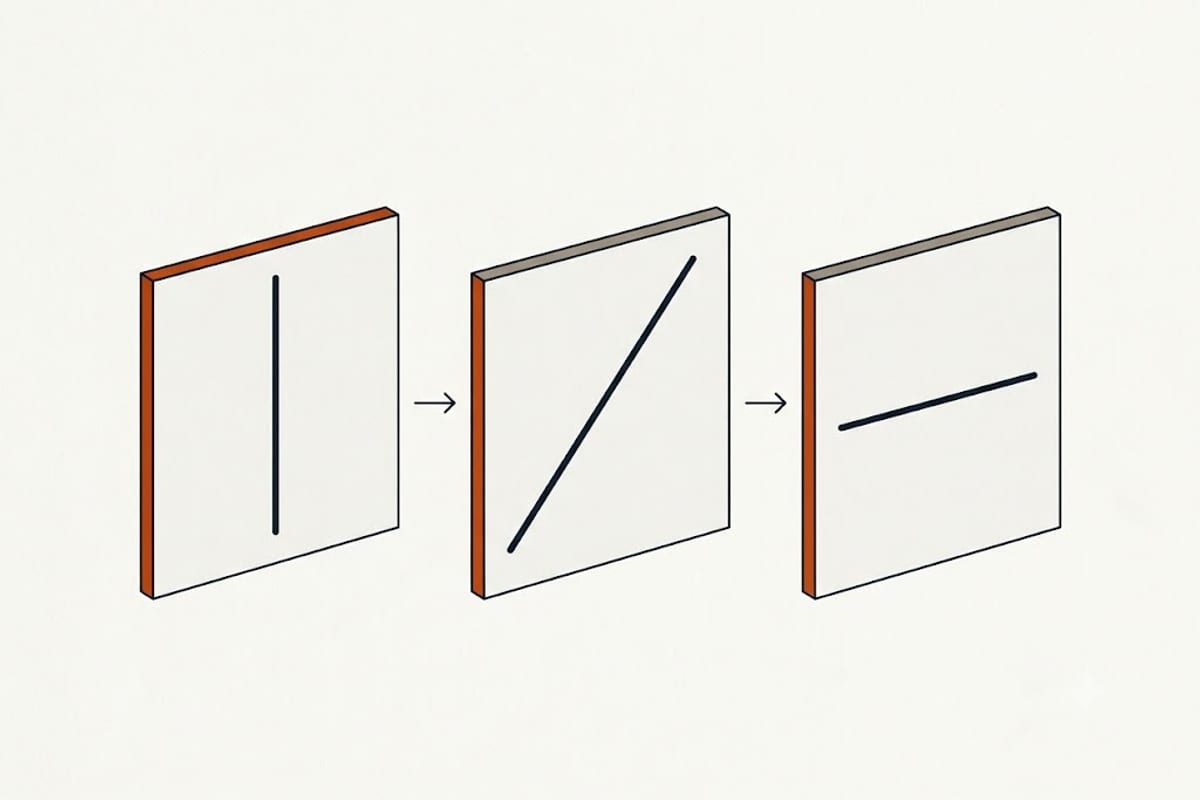
Horizontal cracks in a foundation wall. These are the serious ones, and they are usually not settlement at all — they are lateral pressure from soil pushing the wall inward. Often accompanied by bowing. This can progress to failure and it needs looking at promptly.
Any crack wider than about ¼ inch, or one where the two sides are offset out of plane rather than just apart.
Diagonal cracks wider at one end than the other. The direction of widening points at which corner is moving.
The other signals, which arrive before the cracks
Doors and windows that stick, particularly if it is seasonal — worse in a dry summer, better after rain. That pattern points at expansive clay rather than anything structural.
Gaps opening between the wall and the ceiling, or between crown moulding and the ceiling.
Floors sloping. Roll a marble. Every old house has some slope; what matters is whether it is increasing.
Gaps around a chimney, or the chimney separating from the wall.
Nail pops and tape seams opening in a straight line across a ceiling.
The measurement that answers the real question
Not "is there a crack" but "is it moving".
Mark both ends of the crack with a pencil and the date. Measure the width with a feeler gauge or a crack monitor from a hardware shop. Photograph it with a ruler in frame.
Then check in three months, and again after a season change.
A crack that has not moved in a year is a crack, not a problem. A crack that widens measurably over a season is a reason to bring in an engineer. That distinction is worth several thousand dollars and it costs nothing to establish.
Get an engineer before a contractor
An independent structural engineer charges a few hundred dollars and writes a scope that is not authored by the company selling the repair.
On a job that will run into five figures, that is the cheapest risk reduction available — and it gives you a specification to price three bids against, rather than three different opinions about what the work should be.
Look at the water first
Most residential settlement is moisture-driven. Before anything else, walk the outside after rain:
- Downspouts discharging against the wall rather than well away
- Ground sloping toward the house in the first ten feet
- Beds and mulch holding water at the foundation
- Large trees close to the building, drawing moisture out of clay in summer
Correcting drainage costs a fraction of pier work, and where the movement is moisture-driven it is what stops the problem recurring after the piers go in.