Sticking doors are the symptom homeowners notice first, and they have three quite different causes.
1. Humidity — seasonal and reversible
Wood absorbs moisture and swells. In a humid summer a door that fitted in February binds along the latch edge or the top, and in winter it frees again.
The signature is that it comes back. The same door, the same season, every year, with no progression.
Nothing structural is happening. Planing a door during a humid August produces a door with a visible gap the following January.
2. Hinges and hardware — local and gradual
Screws work loose in the jamb, particularly the top hinge which carries the most load. The door drops at the latch side and catches on the sill or the strike plate.
The test: open the door partway and lift the handle. If the door moves noticeably, the hinges are the problem.
The fix is usually longer screws through the top hinge into the framing behind the jamb, and it takes ten minutes.
3. Frame racking — the foundation one
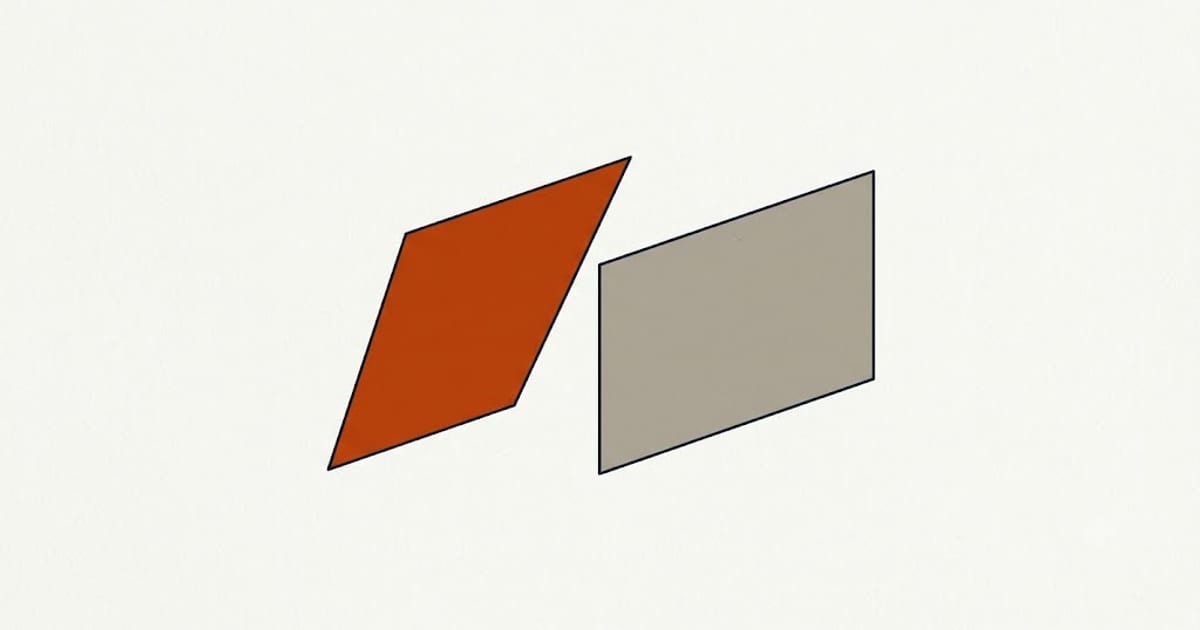
Differential settlement pulls the wall out of square, and the door frame goes with it. The frame becomes a parallelogram, and the door — still a rectangle — no longer fits.
The signature is progression without recovery. It gets worse, it does not seasonally improve, and it usually affects more than one opening.
Reading the gap
The gap between door and frame tells you the shape of the problem.
Even all round, binding everywhere — the door has swollen. Humidity.
Tight at the top of the latch side, wide at the bottom — the frame is leaning, or the hinge side has dropped.
Tight at the bottom of the latch side, wide at the top — the opposite rotation.
Diagonal wedge across the head — the frame is racked, which is the classic foundation pattern.
Photograph the gaps with the door closed. It is a better record than a description and it shows change over months.
The corroborating evidence
Frame racking rarely appears alone. Look for diagonal cracks from the corners of that opening, gaps opening between wall and ceiling nearby, cracked tile in a line, or a floor that slopes measurably in that area.
One sticking door with no other symptom is usually not a foundation problem. One sticking door with a diagonal crack running away from its corner usually is.
Windows tell you the same thing
A window that has become hard to operate, or a double-hung whose sashes no longer meet squarely, is the same racking in a smaller frame.
Casements show it particularly clearly, because the sash either meets the frame all round or it does not.
What to do first
Check the hinges, because it is free and it is frequently the answer.
Note the season and whether the problem has appeared before.
Photograph the gap and mark the date.
Look for a crack at the corners of that opening.
If it is seasonal and reversible, adjust the hardware and leave the door alone. If it is progressive, with cracking, on more than one opening, take floor elevations before doing anything else.
What not to do
Planing a door to fit a racked frame works for a season and destroys the door if the frame keeps moving. It also removes the most useful ongoing measurement you have.
A door that binds a little more each year is a free monitoring instrument. Keep it until you know what the frame is doing.
Exterior doors move for a fourth reason
An exterior door in a frame that is exposed to weather has a fifth variable: the frame itself weathering and the threshold settling. A door that binds at the bottom outside edge is frequently a sill problem rather than a structural one.
Check the threshold for rot and for movement underfoot before reading anything into the door.