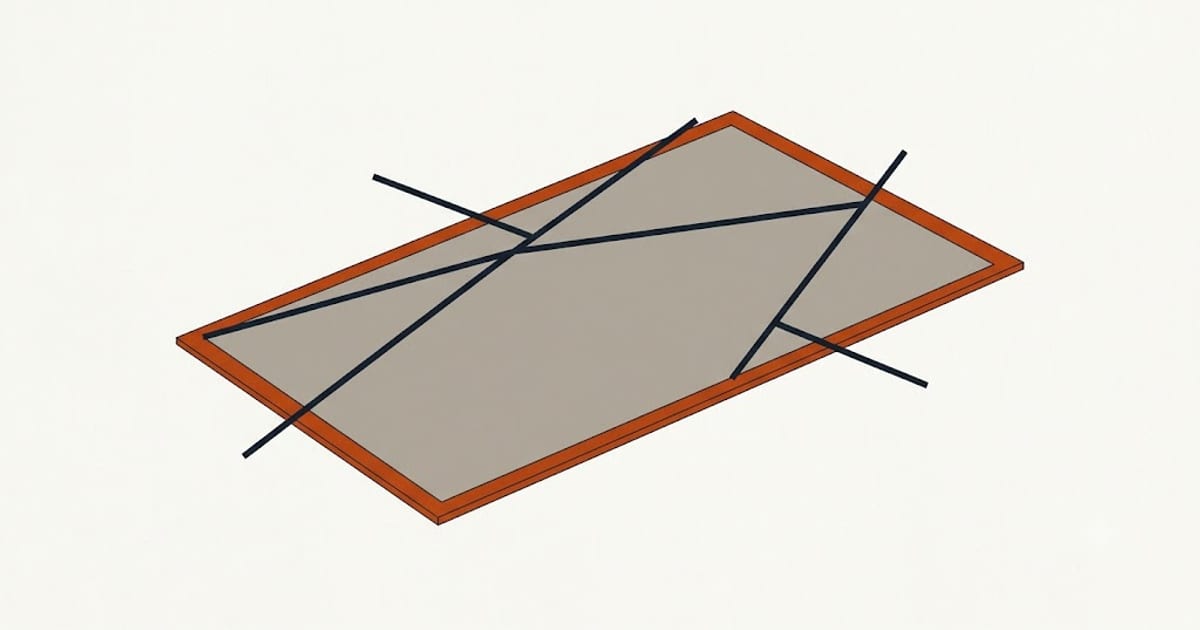
Concrete cracks. All of it, eventually, and most of it harmlessly. What separates a cosmetic crack from a structural one is direction, not width.
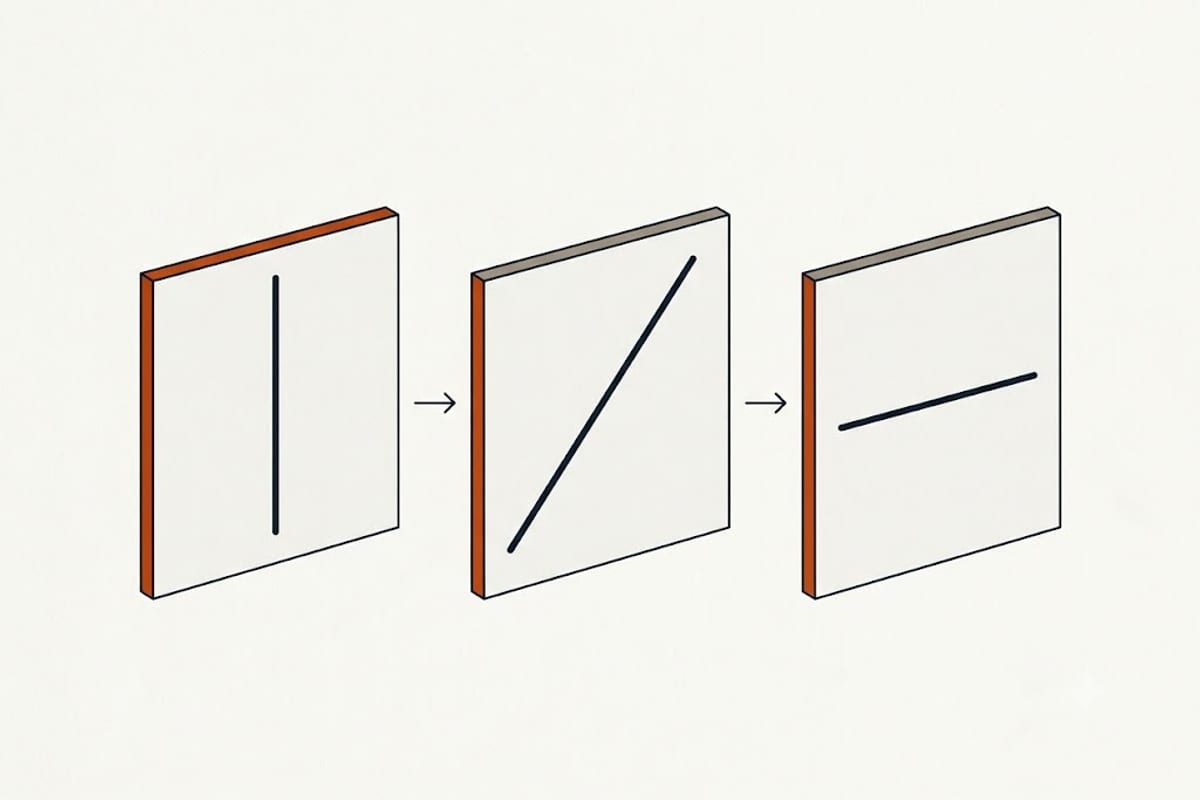
Vertical — usually the least concerning
Straight up and down, often near the middle of a wall or beside an opening, frequently uniform in width.
Concrete shrinks as it cures and continues to shrink slowly for months. Vertical cracks are the usual result, and on a poured wall they are extremely common.
Watch for width and for water. A vertical crack that stays under about 1/8 inch and does not leak is generally monitored rather than repaired structurally. One that is wider at the top than the bottom is telling you something is rotating, which moves it into the next category.
Diagonal — differential settlement
Running at roughly 45 degrees, typically from the corner of a window or door opening, and characteristically wider at one end.
This is the signature of one part of the foundation moving relative to another. The wide end points toward the side that has dropped.
Diagonal cracks that are growing, that appear on more than one wall, or that come with doors binding and floors out of level are the pattern that leads to a piering conversation.
Horizontal — the serious one
Running along the wall, often at or near mid-height, sometimes with the wall bowing inward.
This is lateral pressure from soil outside — expansive clay swelling, hydrostatic pressure from saturated ground, or frost. The wall is being pushed in, and it is a failure in bending rather than settlement.
A horizontal crack is the one to act on regardless of width. It does not repair itself, the mechanism causing it does not stop, and the remedies — carbon fibre straps, steel beams, wall anchors, or rebuilding — are all more involved than crack injection.
Stair-step in block or brick
Following the mortar joints in a stepped pattern, which is simply what a diagonal crack looks like in a jointed material.
Read it as a diagonal crack. The direction it steps and which end is wider indicate where the movement is.
Where a stair-step crack comes with the wall also bulging inward, both mechanisms are present and it is a lateral pressure problem as well.
Width, and the numbers people quote
Common rules of thumb treat under 1/8 inch as monitoring, 1/8 to 1/4 as worth an assessment, and over 1/4 as needing one.
Those numbers are useful and they are secondary to direction and to change over time. A crack that has been 3/16 inch for fifteen years is different from one that reached 3/16 inch this spring.
Monitoring properly
Mark each end of the crack with a pencil line and the date. Measure the width at a marked point with a crack gauge or feeler gauge and write it down.
Photograph it with a ruler in frame, in the same light, every few months.
Six months of that record is worth more to a structural engineer than any description, and it is the difference between "it seems to be getting worse" and evidence.
When to bring in an engineer rather than a contractor
Any horizontal crack. Any crack over about a quarter inch. Cracks on multiple walls. Doors and windows that have started sticking. Floors visibly out of level.
A structural engineer is paid for an opinion and sells nothing. A repair contractor is paid for repairs. On a house where the answer might be "monitor it," those are different incentives, and the engineer's report is also what lets you compare contractor quotes against a common scope.