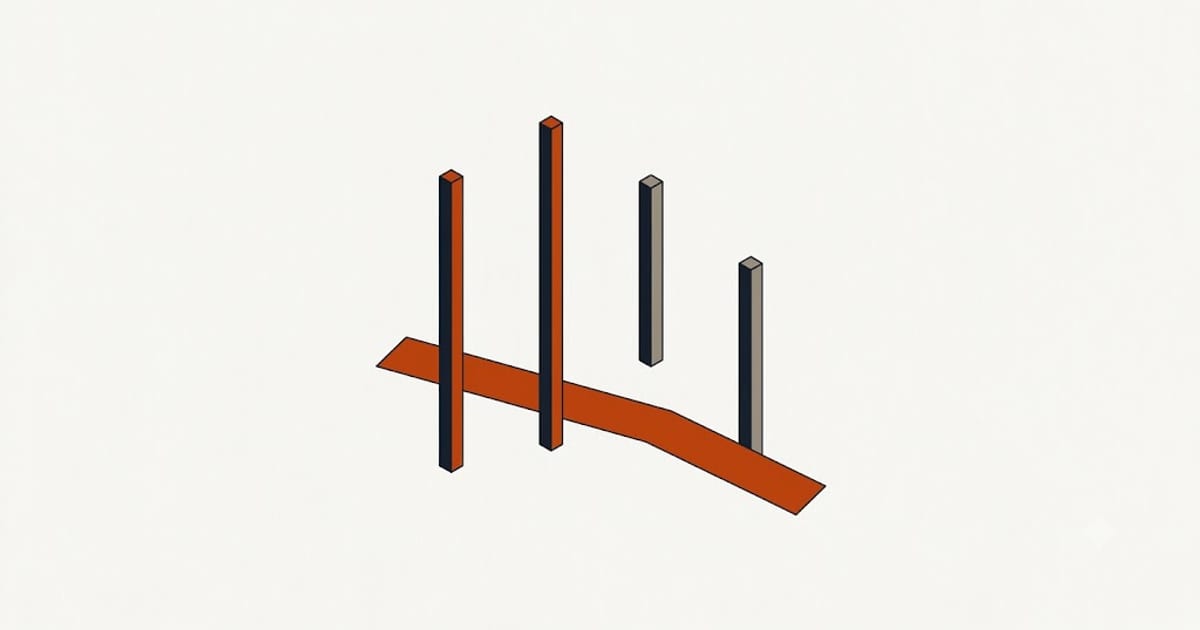
The most common question about piers is how deep they go, and the honest answer is that nobody knows until they are installed.
What the pier is looking for
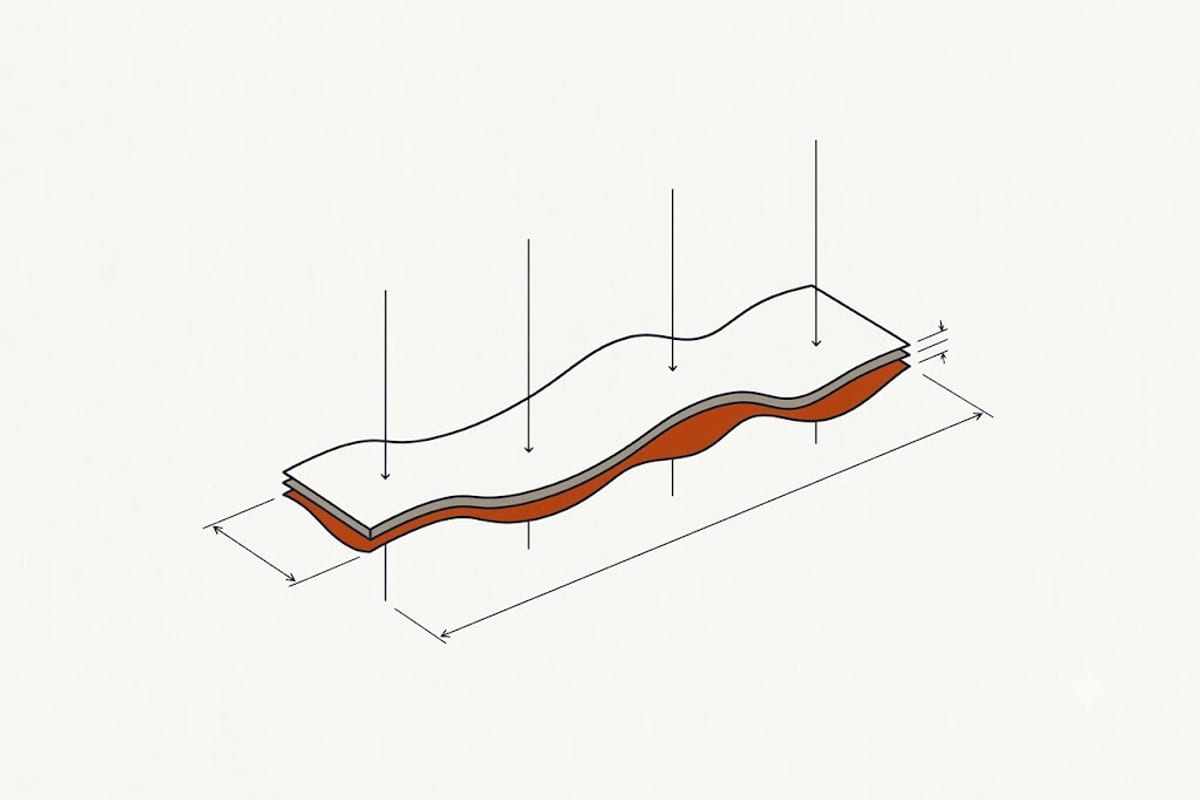
A bearing stratum — soil dense enough, or rock, that will not compress under the load the building applies. It is not at a fixed depth, and it is not flat.
Under one house, piers along the same wall commonly differ by ten feet or more, because the layer they are seeking rises and falls.
How each type knows it has arrived
Push piers stop advancing under maximum pressure. That is refusal, and it is physical rather than inferred.
Helical piers reach a target torque, which correlates with capacity through a published relationship.
Neither is a depth. Both are a condition, and depth is whatever it took to reach it.
Typical ranges, with the caveat
Residential piers frequently land somewhere between 10 and 30 feet. Shallower happens where competent soil is near the surface; considerably deeper happens on deep soft deposits.
Those numbers are context, not a specification. A contractor quoting "our piers go to 22 feet" is describing their average, not your house.
Why an unusually shallow pier is worth questioning
A pier that refuses at 6 feet when its neighbours went to 25 has probably hit an obstruction — an old footing, a boulder, buried rubble — rather than a bearing layer.
An obstruction supports the pier until it does not. The right response is to investigate, and sometimes to relocate the pier, rather than to record it as complete.
Comparing the depths across the job is how this gets caught, which is another reason to have the record.
Why unusually deep piers matter commercially
Depth costs money on push piers, because each section is material and time. A quote based on an assumed depth can move substantially if the piers go much further.
Establish in the contract what happens: absorbed by the contractor, charged per additional section, or a cap. Deciding that after the machine is on site is the worst time.
What a geotechnical report would tell you
Where a site is difficult — deep soft soil, fill of unknown origin, a history of problems in the neighbourhood — a geotechnical investigation gives boring logs and soil properties before anyone quotes.
It costs more than an engineer's visual assessment and it removes most of the uncertainty about depth. On a large or unusual job it is worth it; on a straightforward suburban house it usually is not.
The record to insist on
Depth and refusal pressure, or depth and final torque, for every pier, on a plan showing positions.
That single document is the difference between owning a verified installation and owning an invoice. It also matters at resale, where a buyer's inspector will ask for exactly that.
What depth does not tell you
A deep pier is not automatically a good one, and a shallow pier is not automatically bad. A pier that reached dense gravel at 8 feet is better founded than one that stopped in soft clay at 30.
The question is always what it landed on, and the refusal pressure or torque figure is what answers it. Depth on its own is the least informative number in the record, which is ironic given that it is the one everybody asks about.
Neighbouring houses are weak evidence
People frequently ask what the piers went to on the house next door, and the answer is genuinely not predictive. Bearing layers undulate over short distances, old stream channels and filled depressions are common in developed land, and two houses on the same street can need very different depths.
Where a whole street was built on the same engineered fill at the same time, the correlation is better. Where the houses are of different ages, it is close to useless.