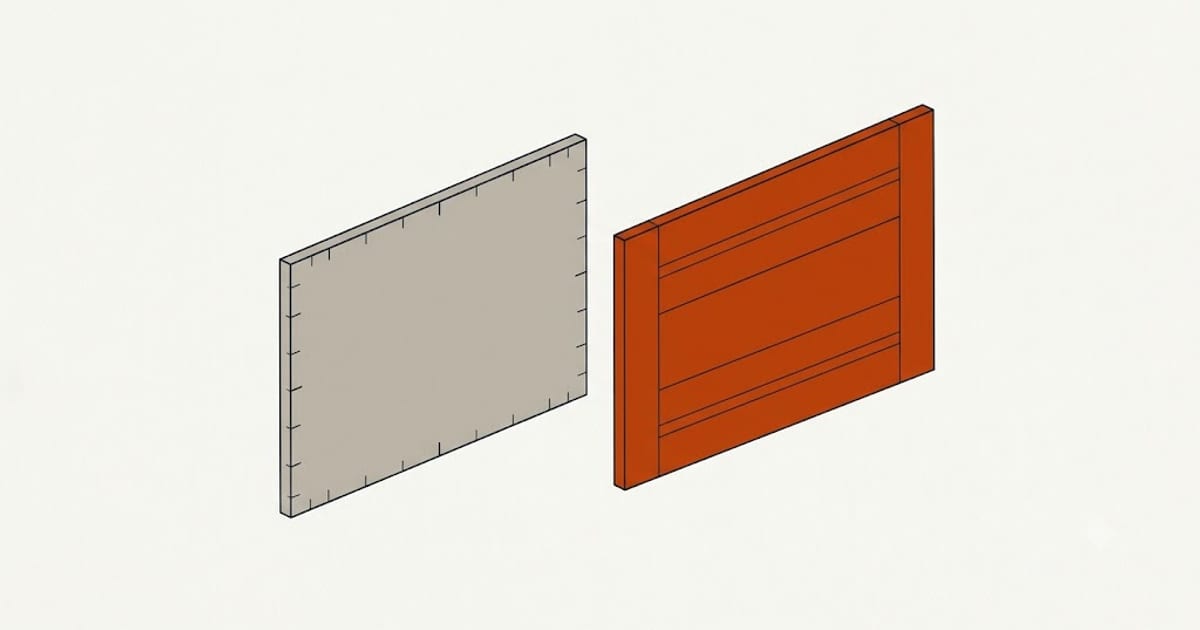
Most foundation repair happens at the perimeter, because that is where the walls are and where access is easiest. On a slab foundation, that is not always where the movement is.
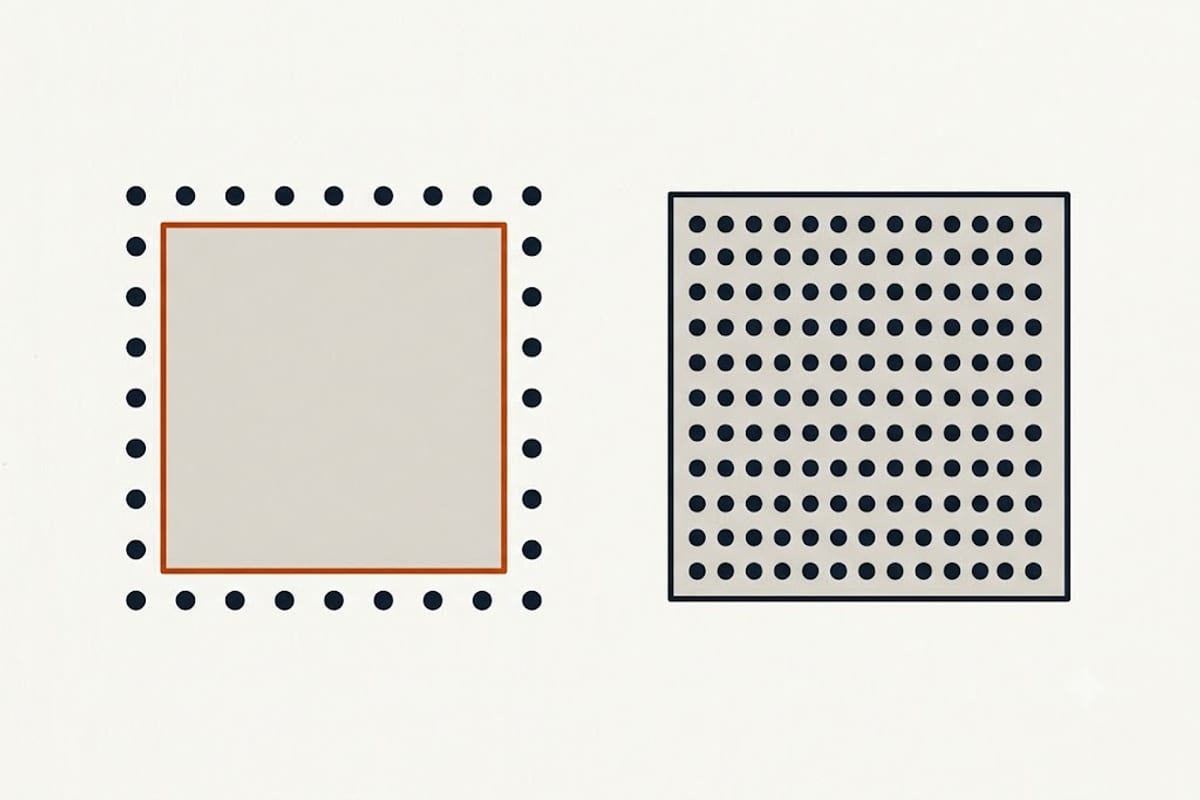
Why the middle can drop independently
A slab-on-grade bears on soil across its whole area. The soil under the middle is shielded from rain and sun and behaves differently from soil at the edge, but it is not immune — a plumbing leak, poorly compacted fill, or organic material decomposing under the centre all cause the middle to settle.
Perimeter piers hold the edges. If the middle is dropping, holding the edges makes the dish deeper.
How you know
The elevation survey across the whole floor, plotted. Interior settlement shows as a depression away from the walls; perimeter settlement shows as edges falling away from a higher centre.
This distinction cannot be made from cracking alone, which is why an elevation plot is worth more than a walk-through.
What interior support involves
Cutting the slab at each pier location inside the house, installing the pier, connecting it to the slab, and patching the concrete.
That means working in finished rooms, moving furniture, dust containment, and floor finishes that will not match afterwards where they cannot be lifted and relaid.
It is more disruptive than perimeter work by a wide margin, and it costs more per pier for the same reason.
Alternatives to interior piers
Polyurethane foam injection. Expanding foam injected through small holes lifts and supports the slab. Far less disruptive, faster, and appropriate where the void under the slab is modest and the underlying soil is competent.
Mudjacking, the older equivalent using a cement slurry. Cheaper, heavier, and larger holes.
Neither reaches a deep bearing layer. They fill voids and lift; they do not underpin. Where the soil below is itself unstable, they are a temporary measure.
The common mistake
Quoting perimeter piers for a house whose survey shows interior settlement, because perimeter work is what the crew does and it is what the customer expected.
The result is a house whose edges are now fixed while the middle continues to drop, and the differential — which is what causes damage — gets worse rather than better.
When perimeter alone is right
Where the survey shows the edges have dropped and the interior is stable, which is the common pattern in expansive clay regions where perimeter soil dries and shrinks.
That is genuinely the majority of residential foundation repair, and it is why perimeter piering is the standard product. It is only a mistake when it is applied without checking.
Crawl space and basement houses
A house over a crawl space has interior piers already — the piers or columns supporting the central beam. Those settle too, and they are far easier to address than slab interior work: shims, new footings, or adjustable columns, all reachable from below.
A sagging floor in the middle of a crawl space house is usually a beam and column problem rather than a foundation problem, and it is a much smaller job.
The order of operations
Elevation survey first. Plot it. Establish the shape. Then decide what needs support and where.
A contractor who arrives, looks at the cracks and quotes a perimeter pier count without measuring the floor has skipped the step that decides whether their proposal addresses the problem.
Plumbing under a settled slab
Where the middle of a slab has dropped, the drain lines beneath it have dropped too, and they may have lost their fall or pulled apart at a joint. A camera survey of the drains is worth doing before any lift, because lifting the slab moves those pipes again.
It is also worth doing before deciding the cause: a leaking drain line is one of the more common reasons the middle of a slab settles in the first place, and repairing the slab without repairing the leak repeats the whole exercise.
Cost expectation
Interior pier locations typically cost more per pier than perimeter ones, because of the slab cutting, the containment and the patching. Foam injection is priced by volume of material rather than per pier, which makes the two hard to compare directly.
Ask for both approaches to be priced where both are viable. The disruption difference is large enough that many homeowners choose on that rather than on price.