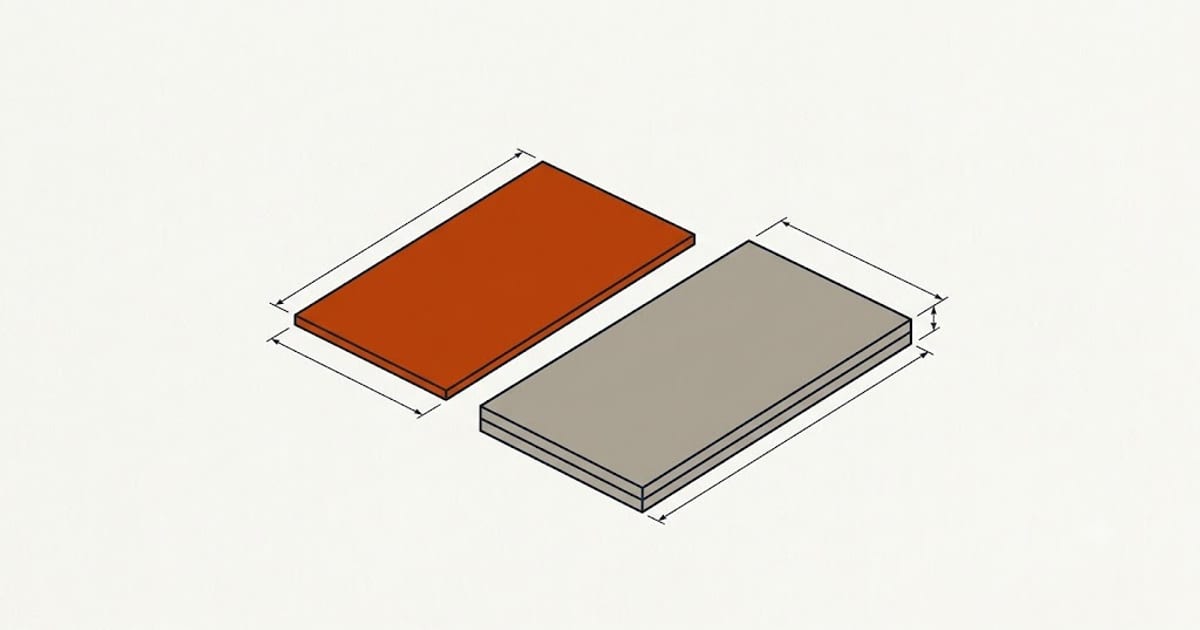
Some clays change volume substantially with moisture content. They swell when wet, shrink when dry, and a foundation sitting on them rides that movement.
The property is measured by plasticity index, and soils above roughly 15 to 20 are considered expansive. Large areas of Texas, Oklahoma, Colorado, California and the Gulf states sit on them.
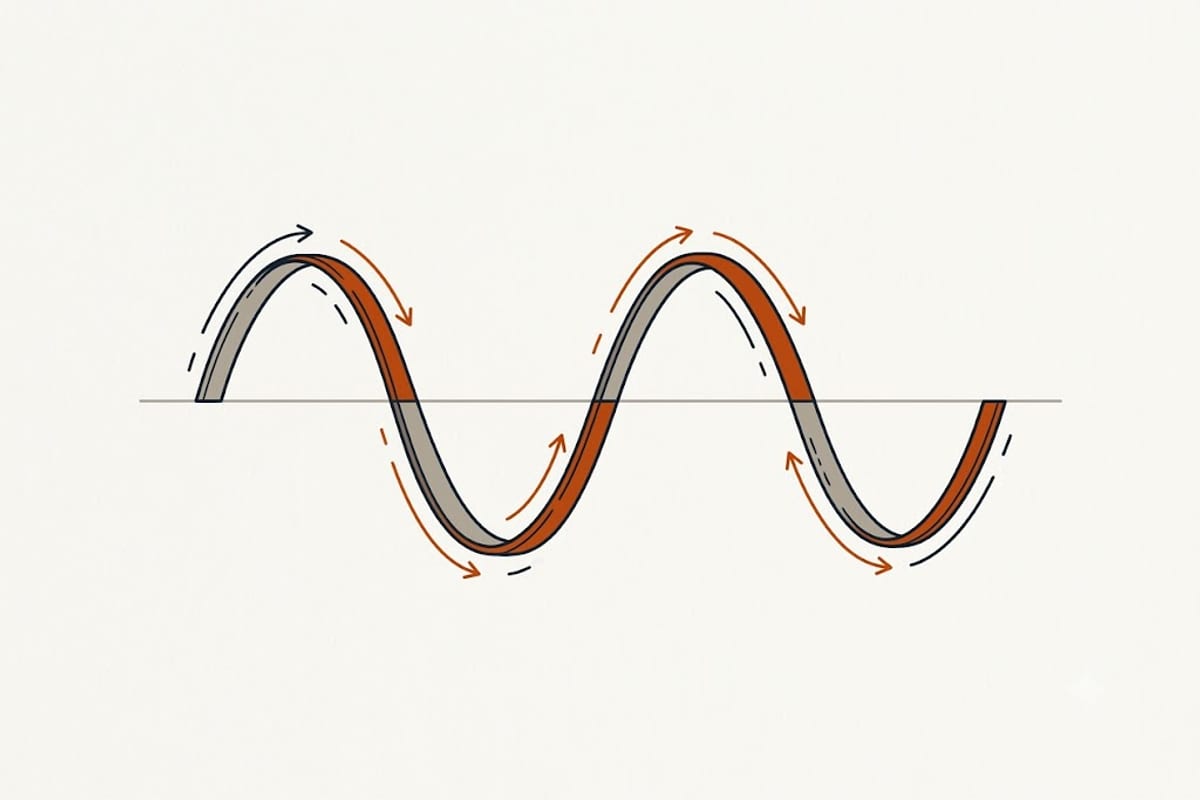
The movement is at the edge, not the middle
Soil under the centre of a slab is shielded from rain and sun and stays at a fairly stable moisture content. Soil at the perimeter is exposed and swings with the weather.
The result is a foundation whose edges move while the middle does not — edge lift in a wet season, edge drop in a dry one — and the cracking pattern follows.
This is why the perimeter is where damage appears and where repairs go.
What makes it worse
Drought followed by heavy rain. The most damaging pattern there is: soil shrinks and pulls away from the foundation, then water runs straight down the gap and swells it rapidly.
Large trees close to the house. A mature tree draws a great deal of water from the soil, and it draws most in summer when the soil is already drying. The zone of influence extends roughly to the canopy width, and often further.
Downspouts discharging at the wall, which soaks one spot and leaves the rest dry.
Poor grading that ponds water on one side.
Plumbing leaks under the slab, which is a common and often unrecognised cause. A slow leak keeps one area permanently wet while the rest dries, and it produces localised movement that looks like a soil problem.
Moisture management, which is the actual remedy
The goal is even, stable moisture around the whole perimeter — not dry, and not wet.
Grading away from the house, commonly cited as about 6 inches of fall over the first 10 feet.
Gutters and downspout extensions discharging well clear of the foundation. This is the cheapest single intervention and the most frequently neglected.
Foundation watering during drought. A soaker hose set back a foot or two from the perimeter, run for short periods on a schedule, keeps the soil from shrinking away. This is standard practice in expansive-soil regions and it is genuinely effective.
Root barriers where a large tree is close, installed to a depth that intercepts the roots drawing from under the house.
Fixing plumbing leaks, which requires finding them — a static pressure test and a sewer camera are the usual methods.
Why piers alone are incomplete
Piers transfer load to stable soil below the active zone and stop the house sinking. They do not stop the surrounding soil from swelling.
A house on piers with unmanaged moisture can still experience heave — being pushed up between piers — and heave produces its own cracking. Repairing the settlement without addressing the water is how a house comes back for a second round of work.
Any contractor whose proposal is piers and nothing else, on expansive clay, has left out the half of the problem that recurs.
The order to do things
Drainage and gutters first, because they are cheap and they change the moisture regime.
Find and fix any plumbing leak, because nothing else works while one continues.
Then monitor for a season. A meaningful share of movement stabilises once water is managed, and the house that needed piers in March may not in September.
Then pier what is still moving, and keep the moisture management in place afterwards.
Monitoring, cheaply
A soil moisture probe pushed in at a few points around the perimeter, read monthly and written down, tells you whether the moisture regime is even. It costs very little and it turns a guess into a record.
Floor elevations taken once a year with a laser level do the same for the structure. Two years of both makes the difference between seasonal movement and progressive settlement obvious, and that distinction decides whether the house needs repair at all.
Seasonal movement is not failure
A house on expansive clay moves through the year. Doors that stick in August and free in February are describing the soil rather than a defect.
The question is whether the house returns. Movement that cycles and comes back is being managed; movement that goes one way and stays is settlement. Only the second one is a piering problem, and telling them apart requires measuring across at least a full year.