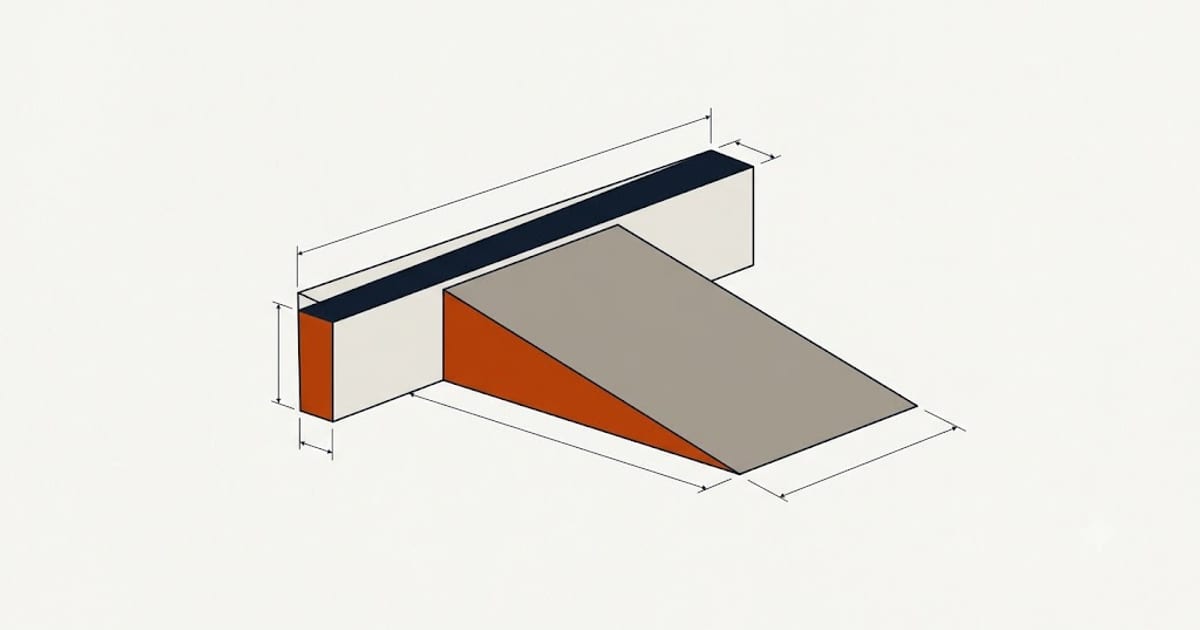
Before piers, before injection, before anything expensive, there are two things that cost very little and that fix or prevent a large share of foundation moisture problems.
Grading
The ground should fall away from the house — commonly cited as about 6 inches over the first 10 feet.
Over years, soil settles against a foundation, mulch is added, beds are built up, and the grade reverses without anyone deciding to do it. Water then runs toward the wall.
Check it with a level and a straight board, or a string line and a tape. It takes fifteen minutes and it is the measurement nobody makes.
Fixing it means adding soil, not mulch — mulch decomposes and holds water. Keep the finished grade several inches below the siding or the top of the foundation wall so the cladding is not in contact with soil.
Gutters and downspouts
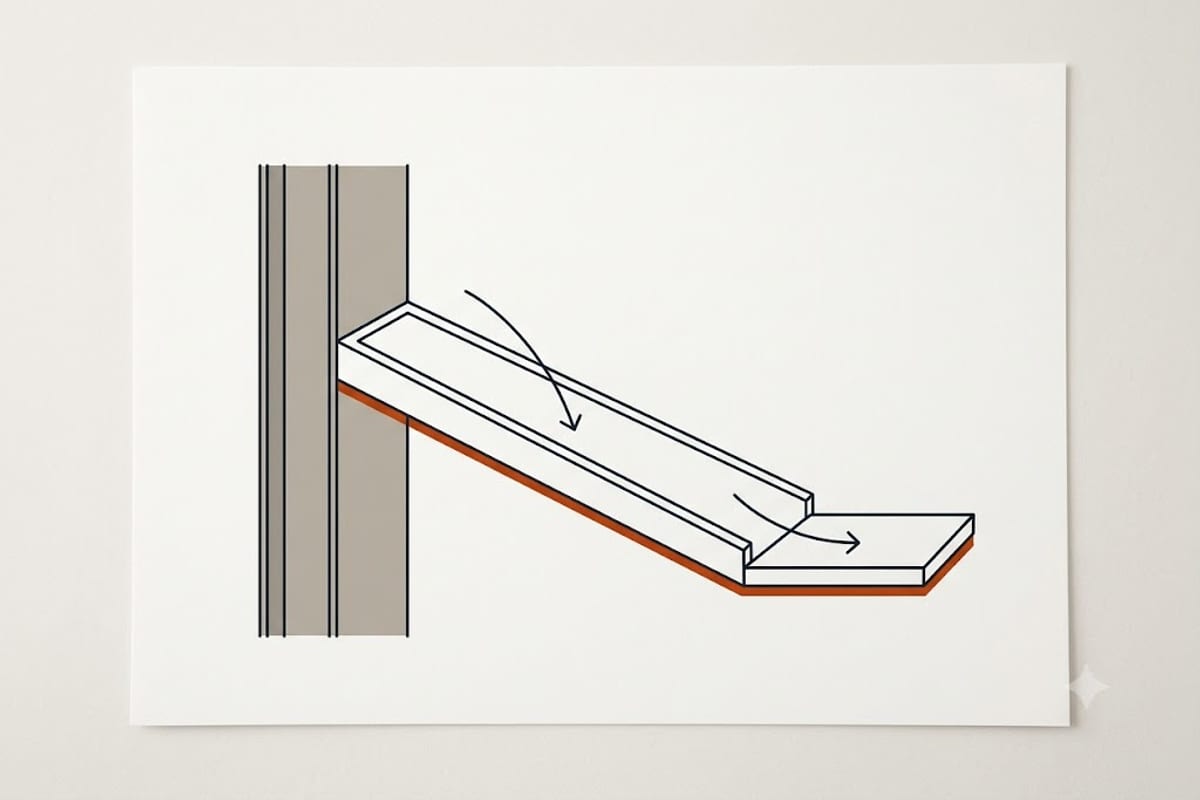
A roof sheds a very large volume of water, and downspouts concentrate all of it into a few points.
A downspout discharging at the base of the wall delivers hundreds of gallons to one spot in a single storm. On expansive clay that is a localised swelling event; on any soil it is erosion and hydrostatic pressure.
Extend downspouts so they discharge well clear of the foundation — commonly at least 5 to 10 feet, and further where the ground is flat. Buried solid pipe to a pop-up emitter is the tidy version; a hinged extension is the cheap one.
Keep the gutters clear. A blocked gutter overflows at exactly the point where the water does most harm, and the overflow point is usually a corner.
The two together
Grading decides where water goes once it lands. Gutters decide where the roof water lands in the first place.
Getting one right and not the other is common and only half effective. A perfect grade with a downspout dumping onto it is still delivering the whole roof to one point on that grade.
Where the problems concentrate
Corners, because two roof planes and two grades meet there.
Below valleys, where two roof planes concentrate flow into one downspout.
Where a patio or path meets the house, because paving frequently slopes the wrong way and directs water to the wall.
Under decks, where nobody looks and gutters do not exist.
Sunken planting beds against the wall, which are shaped to hold water.
Irrigation
Sprinklers aimed at the house, or beds irrigated on a timer against the foundation, keep soil permanently wet on one side while the rest of the perimeter dries.
That is exactly the uneven moisture regime that moves foundations. Adjust heads to spray away, and treat perimeter beds as part of the foundation moisture question rather than as gardening.
French drains and when they are needed
Where surface fixes are not enough — a hillside site, a high water table, a persistently wet section — a perimeter drain intercepts subsurface water and carries it away.
That is a bigger job and it should follow the cheap fixes rather than replace them. A French drain installed while the downspouts still discharge at the wall is doing avoidable work.
The order that saves money
Gutters and downspout extensions. Then grading. Then a season of watching, with photographs and crack measurements.
Then, if movement continues, an elevation survey and an engineer. A meaningful share of houses never get past the second step, and the ones that do arrive at the engineer with a year of evidence rather than a description.
Winter, in cold climates
Snow piled against a foundation by shovelling or by a plough melts into that spot in spring, and it does so at the moment the ground is still frozen below and cannot absorb it.
Where snow is being cleared, throw it away from the house rather than against it, and pay attention to where roof snow slides off — a roof that dumps its load in one place every winter is a downspout with worse timing.